

● FAST FASHION TRAVEL LUGGAGE & BAG LEADER
OEM & ODM · SAMPLING & QC · GLOBAL B2B SUPPORT
Develop a collection around your market, product requirements and brand. OMASKA works with brands, importers, wholesalers and sourcing teams on luggage, backpacks and bags—from the initial brief to sample approval and bulk-order planning.
Luggage manufacturing workstations in the OMASKA factory
Choose the route according to how much of the product is already defined. Both routes need an agreed specification and an approved sample before bulk production.
Start with your design, technical details or reference sample. Review construction, material availability, components, branding and manufacturing feasibility with our team.
Start with an existing model or a product concept, then discuss adaptations for your market. The extent of changes, tooling and development work must be confirmed during review.
Start with the features your customers will notice and use. Available options depend on the model, materials, components and order quantity.
Review shell or fabric choices, lining, texture and color references. Confirm exact materials and color approval through the sample process.
Discuss compartments, dimensions, handles, wheels, zippers, straps and hardware. Review any change that affects construction, tooling or performance.
Discuss logo placement and method, labels, hangtags, protective packaging and carton requirements. Confirm artwork and packaging references before production.
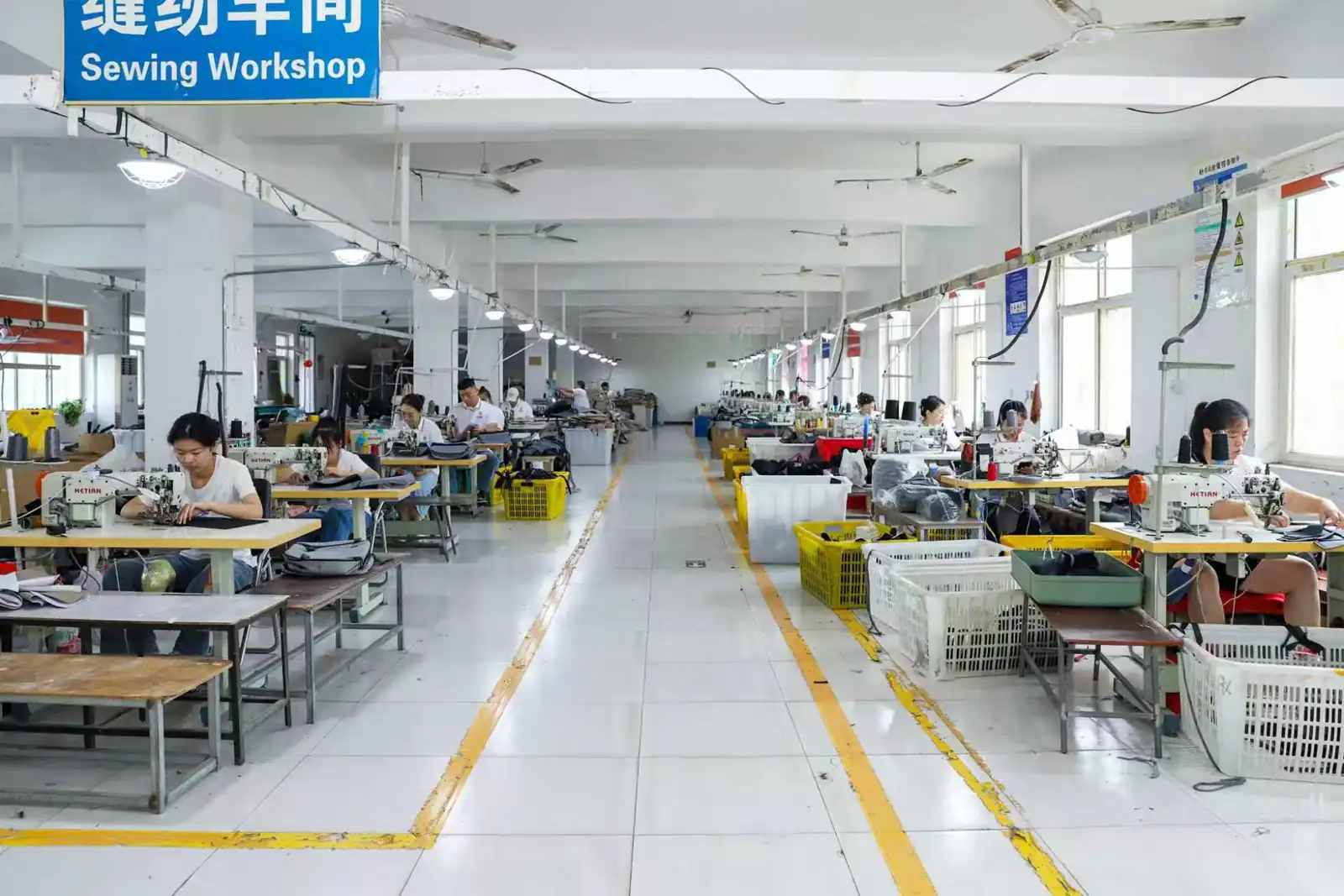
Bag sewing workstations in the OMASKA workshop

Luggage products alongside OMASKA workshop workstations
Each stage resolves a different sourcing decision. Confirm the actual schedule, deliverables and approval responsibilities for your project.
Provide the product type, target market, quantity range, dimensions, material preference, branding reference and target delivery window. Include drawings or a reference sample when available.
Compare construction, materials, component availability and customization scope. Confirm the quotation assumptions, MOQ, tooling requirements and sample arrangements.
Evaluate appearance, construction and functional details. Record revisions and approve the final sample and specification in writing before bulk production.
Align the order specification, approved artwork, quality plan, packing requirements and payment terms. Agree how progress and changes will be communicated.
Confirm inspection findings, quantities, packing, labels and required documents. Coordinate shipment arrangements according to the agreed commercial terms.

OMASKA operators working along the luggage production line
A useful quotation makes assumptions visible. Tell us where flexibility is possible and which details are essential to your collection.
Compare materials, components, construction, logo treatment and packing together. A lower unit price may reflect a different specification.
Model selection, custom materials, color quantities, components and development work can affect MOQ and timing. Request project-specific confirmation rather than assuming one figure applies to every product.
If your project includes confidential designs, exclusivity or dedicated tooling, agree confidentiality, ownership and permitted use in writing before development.
Use these answers to prepare a clear enquiry and avoid assumptions before sampling.
MOQ depends on the model, materials, colors and customization scope. Send the product reference and quantity range so our team can confirm the applicable minimum.
Timing depends on design changes, material and component availability, sample revisions and order scheduling. Ask for a project-specific timeline with approval milestones.
A photograph is a useful starting point, but it may not show dimensions, materials or internal construction. Share additional references, drawings or a sample so the requirements can be reviewed.
Discuss your artwork, logo placement, application method and packaging references with our team. Confirm feasibility, any additional cost and the approval sample for your model.
Agree the approved sample, specification and inspection plan before production. Review the quality-control page and discuss any third-party inspection or destination-market testing requirements.
Send your reference images, product type, target market and quantity range. Include the specifications you already know and the decisions you need help reviewing.